







17 June 2026
A winning 1970s-set series’
THE NEW YORK TIMES
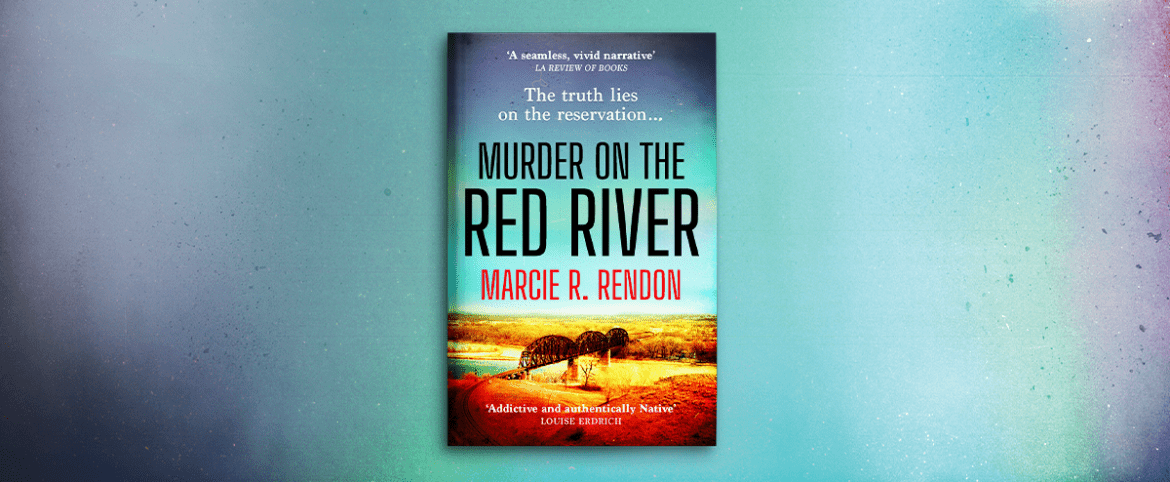
Minnesota, 1971. Nineteen-year-old Renee ‘Cash’ Blackbear spends her days playing pool, drinking beer and driving trucks for the local wheat farmers. Bounced around foster homes like so many other Ojibwe children, Cash doesn’t bother much with friends – except her guardian, Sheriff Wheaton, who’s kept an eye out for her since she went into the system.
When the body of a murdered Ojibwe man is found discarded in a cornfield, Wheaton asks Cash for help. The residents of the nearby Red Lake Reservation have good reason to distrust outsiders, and Cash may be the only one who can get them to talk. But racial tensions run deep along the Red River, and soon Cash isn’t only searching for justice: she’s fighting for her life.
‘Masterfully weaves two stories in a seamless, vivid narrative’
LOS ANGELES REVIEW OF BOOKS
‘Rendon writes with flat-out authority’
LISA SANDLIN
Cash turned on the radio and sat down at the small table in her makeshift kitchen to drink her morning coffee. The window overlooked the Northern Pacific Railroad tracks. If she leaned a little forward and to the left, she supposed she could catch a glimpse of the corner of the Casbah. But her attention was caught by the radio announcer talking about a body that was found in a stubble field thirty miles north of the FM area off Highway 75.
The broadcaster was saying Sheriff Wheaton had been sent out to check on a suspicious pile of rags in the middle of the field and found a body.
Cash jumped up, pulled on the cleanest dirty socks she could find, put on her tennis shoes and poured the remainder of the coffee into her Thermos. Within five minutes she was on Highway 75 headed north, back on the Minnesota side of the Red.
Thirty minutes later Cash leaned against her mud-spattered Ranchero and watched Wheaton talk with two men. Except for their black suits and Wheaton’s sheriff ’s uniform, they could have been any three men discussing next year’s corn crop, the price of wheat on the Minneapolis Grain Exchange or the odds that the Sox might take the World Series. All three stared down at the flattened stubble. A body lay there, his head facing toward the river, away from Cash.
Cash reached into the pocket of her jacket for a crumpled pack of Marlboros. She tapped one out and put it to her mouth, then fished in her jeans pocket for a book of matches. With a practiced left-hand move, she lit it one-handed by bending a match over the back of the matchbook. It was a trick she’d learned from one of the vets returning from Vietnam. In a drinking binge in a cornfield at the end of last summer, he had shown her the one-handed match trick. ‘You need it in the jungle,’ he said, ‘so you can keep your other hand on your rifle at all times. Of course, there are times when you are out on patrol and you just don’t light up at all ’cause the tip of a lit cigarette lets the gooks know exactly where your head is.’
Cash had practiced the one-handed trick over and over, suffering small black sulfur burns on her thumb before she got the hang of it. That soldier had re-upped as soon as he could. He had come into the Casbah for one last hangover before shipping out. Said he just couldn’t make it out here in the real world. He was going back until the war was over or they shipped him home in a bag. Sometimes Cash thought about him and wondered where he was, other times she just didn’t want to know.
She exhaled the smoke upward where it joined lazy fall clouds – fat like cotton candy – drifting slowly across the sunlit August sky.
The field where the men stood edged up to the Red River tree line. Cash reckoned this close to the river it was probably feedlot corn a farmer grew, silage to feed his animals over the winter – not the cash crops of the larger acreage fields one or two miles away.
Cash put her left heel up on the Ranchero’s front bumper and rested back on the hood, warmed by the late summer sun, wondering if the body in the field was cold or if the sun was warming him too. She couldn’t tell much of what had happened to him. She assumed it wasn’t a natural death or Wheaton wouldn’t be here and neither would the two guys dressed in suits. Around here, men only wore suits for church or if they worked at the bank.
One of the suits bent over and lifted the dead man’s left shoulder. It was then Cash got a look at the man’s face – he was Indian. Wheaton glanced her way.
When she first pulled up, he had acknowledged Cash’s presence with an imperceptible nod and a subtle hand gesture that she read as Don’t come closer.


