








04 March 2026
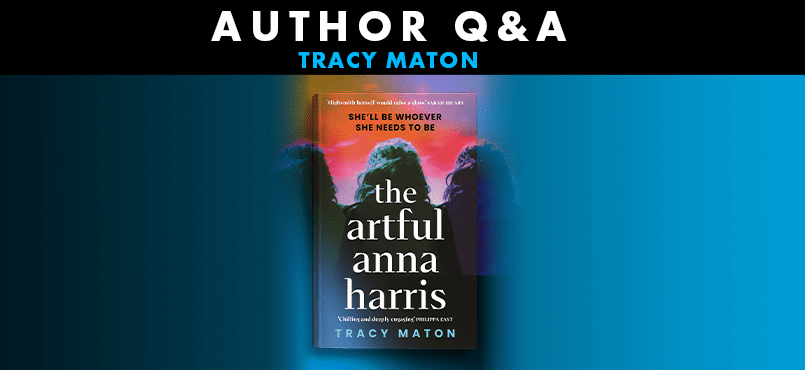
‘Highsmith herself would raise a glass’ – SARAH HILARY
‘Drew me in from the very first page and had me hooked throughout’ – PHILIPPA EAST
‘An intriguing cat and mouse game, which will keep you reading into the early hours’ – TINA BAKER
‘You are quite the chameleon, aren’t you? You could wear anything, do anything, and yet you choose plain, plain, plain. Is it all a front for a secret life?’
When the vivacious Sofia Carstairs arrives in her sleepy country village, Anna knows her life will never be the same again. Her new best friend is carefree, elegant and intoxicating. Her life doesn’t revolve around church flower arrangements or Sunday lunches with the in-laws. Sofia reminds Anna of the person she used to be, before she worked so hard to fit in that she practically disappeared.
But is it enough to just be Sofia’s friend? Anna wonders what it would be like to be Sofia, if only for a little while. But once Anna starts pretending, she finds it easy to pretend the rules don’t apply to her. How far will Anna go to get what she wants? And what will she do to those who stand in her way?
Full of sharp observations and shocking twists, The Artful Anna Harris is perfect for readers looking for the next The Talented Mr Ripley.
Early readers have been struck by the clever parallels between The Artful Anna Harris and Patricia Highsmith’s The Talented Mr Ripley. As a fan of Highsmith, did you intend to write an homage to her work, or did it come out naturally as you were writing?
The way Highsmith approached the crafting of an antihero was in the periphery of my vision throughout. Who better to learn from, I thought.
It is fair to say that Anna does some outrageous things throughout the book, and yet she never feels like a villain. How did you go about writing a main character who is unconventional, flawed and yet also sympathetic – at times, even relatable?
Before I began to write I had decided Anna should be someone you might be friends with. The premise being that antiheroes don’t have horns or venomous breath to signal their dark side, but are like you and I – except a little bit different.
Anna isn’t the only character, of course. The novel is full of rich, vibrant and interesting people – Sofia, for example, who is perhaps the Dickie Greenleaf equivalent. Do you have a favourite character, aside from Anna?
Although very much a supporting character, the elderly lady, Jan, is my favourite because she is so sharp and feisty. I grew up in a village and when I was young my two best friends were Bet and Dot, both in their seventies. Older people shouldn’t be underestimated!
You’ve created a really rich world in the novel – the village where Anna lives, the school, the church and all the characters that appear. How much of this world did you base on reality and how much did you have to invent?
Having lived in a village, the juxtaposition of community and claustrophobia is very familiar to me. Pretty they may be, but villages, like old ladies, are not benign.
Are there any other novels that centre around an antihero that you would recommend to readers?
Sebastian Faulk’s Engleby is a classic example of a very unlikeable character who captures the attention and holds it even as his depravity dawns on the reader. More recently, I found István in Flesh by David Szalay interesting for his passivity throughout the novel.


