








14 July 2026
‘Excellent. Auhl deserves a series of his own’ THE TIMES
‘A superb chronicler of cop culture’ SUNDAY TIMES
‘Disher’s sublime touch for atmosphere and tension permeate this absorbing, emotional story’ DAILY MAIL
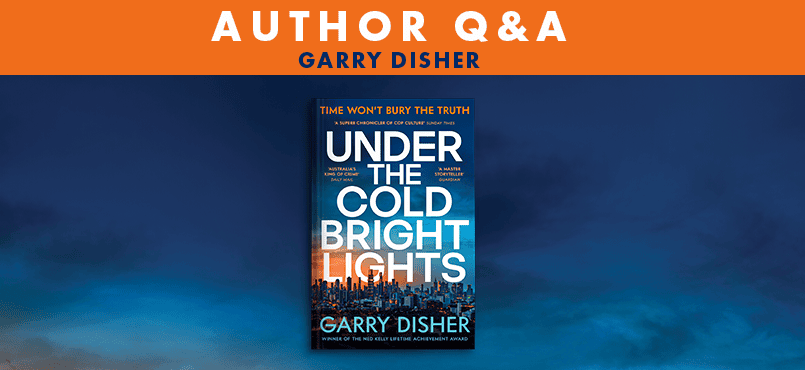
TIME WON’T BURY THE TRUTH
Sergeant Alan Auhl has come out of retirement. Once a shining light in Victoria’s homicide squad, he now runs the Cold Case Unit, casting an experienced eye over unsolved murders and missing persons. The young detectives think he’s washed up, but this doesn’t faze Auhl. He does things his own way, and his way delivers.
Whether he’s identifying a skeleton found under a concrete slab, gathering enough evidence to finally convict a doctor who killed three women, or answering a daughter’s plea that her father’s death was no accident, Auhl always gets results. Because every case, no matter how cold, deserves justice.
From the author of the beloved Paul Hirsch mysteries and Hal Challis investigations comes a riveting standalone, perfect for readers of Ian Rankin, Jane Harper and Chris Hammer.
Mischance Creek – the latest Paul Hirsh mystery – was your sixtieth published book! How does it feel to reach this milestone?
Delighted. My early books limped along in terms of sales and reviews, and I didn’t want to teach evening classed to adults in draughty old buildings for the rest of my life (I switched to full-time writing ten years after my first book came out), so I’m glad I persevered.
Despite being published in Australia in 2018, today marks the first UK publication of Under the Cold Bright Lights. What’s it like to see some of your older titles reach a new audience here?
It’s great to find new readers. And given that my out-of-print novels continue to stay alive in my head, it’s reassuring to see them in the outside world again.
Despite writing across genres, you have developed a reputation as Australia’s king of crime. What led you to writing crime fiction? Have you always been drawn to the genre?
I think we can blame my childhood reading – rooting for Enid Blyton’s Famous Five and Secret Seven kids as they outwitted the bad guys. Early in my career I wrote so-called literary fiction (one, The Sunken Road, was nominated for the Booker Prize by my English publisher at the time), but I was always reading crime and thriller fiction and began to tire my well-mannered, fine-writing approach to stories and novels. I needed a man to walk through the door with a gun in his hand.
Your police procedurals are always so tightly plotted, with every thread leading to an expertly crafted and brilliantly clever solution. What inspiration do you take when plotting your books? Do you use research on real cases or is everything a work of fiction?
I’m always reading my daily newspaper with scissors at the elbow, ready to clip out anything that might be useful, or learning useful stuff by other means – and they’re not necessarily crime related. I then use this material as a springboard to a story, or simply as shading, for I invent my own contexts rather than research actual backgrounds and outcomes. Meanwhile, a clipping might sit in a manila folder for years before I can round it out or merge it with another. Under the Cold Bright Lights grew from clippings ten years apart. And I’m a planner, sometimes spending up to three months jotting down planning notes and speculations, and thinking how time, day, and weather or seasonal issues might affect the storyline (how easy is it for the hero to get from A to B in 5 p.m. traffic on a stormy day in mid-winter, for example). I’m not a slave to the plan, though. I’m always listening for warning voices in the back of my head.
Unsurprisingly, we love to discover more brilliant reads. What are your go-to books when asked to give recommendations?
I like to find new writers, of course, but know I’m in good hands when I pick up a book written by Ace Atkins, Val McDermid, John Sandford, Ian Rankin, Michael Connelly, Karin Slaughter, Mark Billingham, Elmore Leonard and Arnaldur Indridason.


